In this article
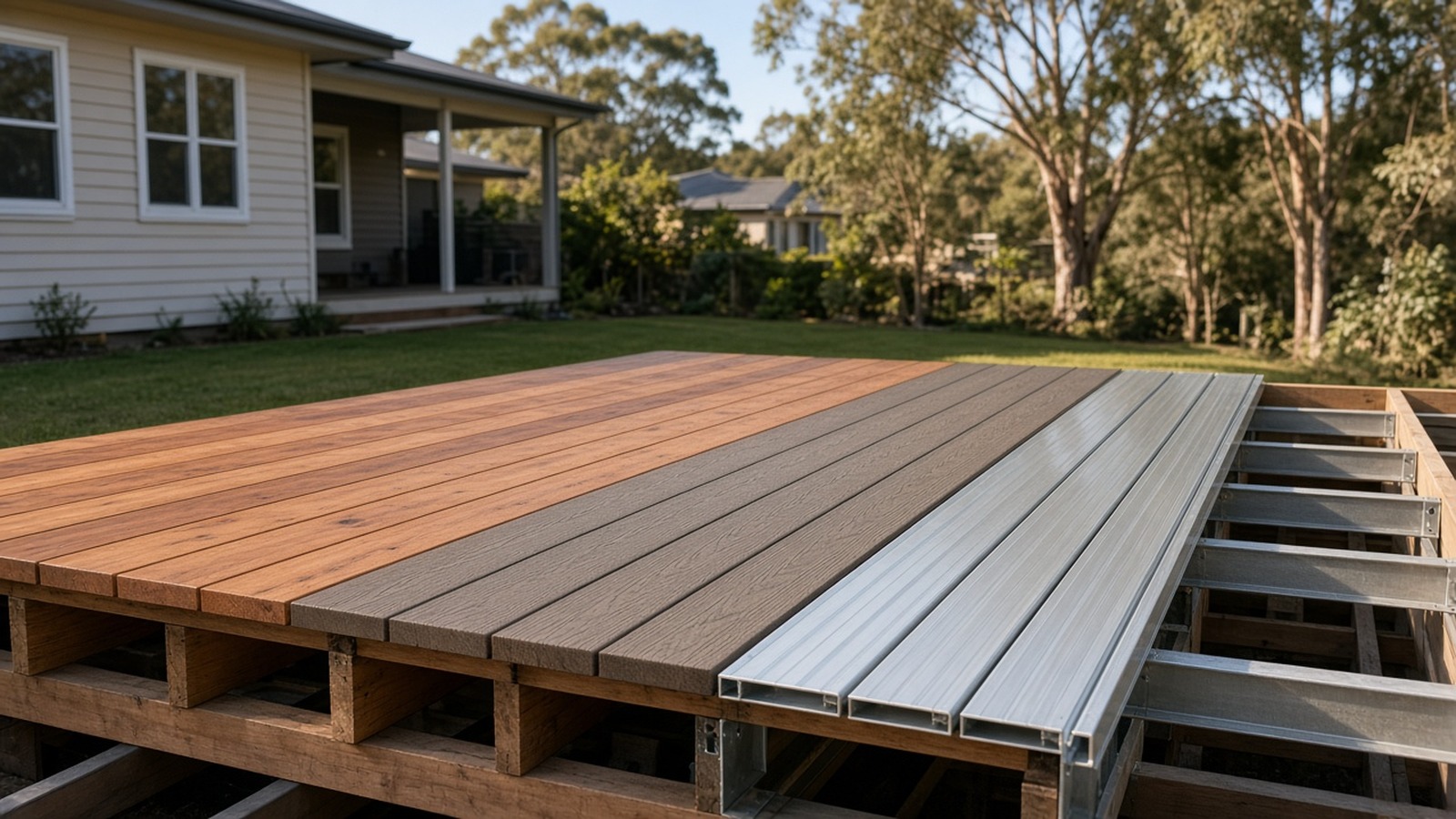
Decking is one of those jobs where the material choice shapes everything that follows: the budget, how much upkeep the owner signs up for, how the deck looks in ten years and, in many parts of Australia, whether it meets bushfire construction requirements at all. This guide compares the three broad options, timber boards, composite boards and metal systems (typically aluminium boards or steel framing), in plain terms so builders, carpenters and owners can narrow things down before getting quotes.
One note before we start: prices, warranties and fire test results vary a lot between brands and products. Treat the comparisons below as general, and check the specific product's documentation before you commit.
Timber decking
Timber is still the most familiar choice. The main options are treated pine and hardwoods such as spotted gum, blackbutt, ironbark and merbau.
Cost
Treated pine is generally the cheaper end of the market. Hardwood boards usually cost more, with price depending on species, grade and board size.
Maintenance
Timber needs the most ongoing care. If you want to preserve the colour and finish, follow the supplier's advice on when to coat and recoat the boards. Left untreated, most timbers will weather to a grey colour.
Lifespan
Lifespan depends heavily on the species, how the deck is built (ventilation underneath, gaps between boards, ground clearance) and how well it's maintained. Hardwoods are rated for natural durability, so ask your supplier for the durability class of the species you're considering and whether it suits above-ground outdoor use.
Good to know
- Timber can be cut, shaped and repaired on site with standard tools, and individual boards are easy to replace.
- Some hardwood species can be used in bushfire-prone areas, which is covered below.
- Check the subframe as well as the boards. WoodSolutions’ timber deck guide covers durability and ventilation for both.
Composite decking
Composite boards are generally made from a blend of wood fibre and plastic, often with a protective outer layer or "cap". Some products are fully synthetic.
Cost
Get an installed quote to compare composite with timber. Some composite systems need specific clips, fixings and trims, which add to the board price.
Maintenance
The main appeal is low upkeep. Composite doesn't need oiling or staining. Clean it as the manufacturer recommends. For example, Trex gives different cleaning advice for different board ranges.
Lifespan
Warranty terms vary by board and use. Check what's covered, such as fading, staining or structural failure, and which installation or maintenance conditions apply. The warranty period alone won't tell you how long the deck will last.
Good to know
- Composite can get hot to walk on in direct sun, particularly darker colours.
- Boards expand and contract with temperature, so the manufacturer's gapping and fixing instructions matter.
- Most composite boards still sit on a timber or metal subframe, and the subframe needs to be suitable for the conditions.
- In a bushfire-prone area, check the evidence for the exact board and how it will be installed.
Aluminium deck boards and steel framing
Aluminium can be the walking surface. Steel is often used for the frame beneath timber or composite boards. Check which parts of the system are metal when you compare quotes.
Cost
Ask for separate prices for the boards and frame. Include coatings, fixings and installation when comparing a metal system with timber or composite.
Maintenance
Metal doesn't rot and isn't eaten by termites, so upkeep is mostly cleaning. Check the coating and fixings are suited to your environment, particularly near the coast where corrosion is a bigger risk.
Lifespan
A well-specified metal subframe or deck can last a long time, provided the coatings, fixings and drainage suit the site. Follow the manufacturer's guidance on environment classifications.
Good to know
- Bare steel and aluminium are non-combustible. Coatings, other components and the way the deck is built can still affect compliance.
- Metal surfaces can get hot in the sun.
- A steel subframe can sit under timber or composite boards. Check the exposure rating and corrosion protection of the frame and its fixings.
Building in a bushfire-prone area
If the property is in a designated bushfire-prone area, the National Construction Code (NCC) can apply bushfire construction requirements to the deck as well as the house. AS 3959, Construction of buildings in bushfire-prone areas, is one way of meeting those requirements where the adopted NCC and local rules allow it.
The site's Bushfire Attack Level (BAL) describes its potential exposure to embers, radiant heat and flames. It ranges from BAL-LOW to BAL-FZ (flame zone). The deck's position and construction matter too.
Lower BALs can still place limits on boards near glazing. At higher BALs, restrictions can also affect the framing, supports and the space beneath the deck. The Victorian Government’s bushfire design guide illustrates how these details change as exposure increases.
Some hardwood species qualify as bushfire-resisting timber, and some proprietary products have test evidence for particular uses. Ask the supplier for evidence covering the exact product, assembly and installation. Give that documentation to your building surveyor or certifier so they can confirm what meets the site’s BAL, the applicable NCC edition and any state or territory requirements.
Other things to check before you choose
- Permits. Whether a deck needs a building permit depends on your state and council, and often on its height, size and location. Check with your local council or a building surveyor.
- Height and balustrades. A deck may need a compliant barrier depending on the fall height under the applicable NCC. Your builder or certifier can confirm what applies.
- Ventilation and clearance. Check drainage, airflow and the minimum ground clearance for your boards and frame, especially on low decks.
- Fixings. Use fixings rated for the material and environment, especially on the coast or with hardwoods that react with some metals.
- Who will maintain it. Be honest about whether the owner will recoat timber regularly. If not, a lower-maintenance option may be the better long-term value.
When to talk to a local supplier
A good local timber or building supplier is often the quickest way to narrow down options. They can tell you which species and products they actually stock, current pricing, lead times, which products come with BAL documentation, and which products are specified for your local climate. They'll also usually have offcuts or samples so you can see and feel the boards before deciding.
Bring the basics with you: approximate deck size and height, whether the site has a BAL rating, how close it is to the coast, and the budget range. You'll get far more useful advice than asking for "decking" in general.
You can browse building suppliers or look for carpenters and builders on TradeBench.